Yuna Cho
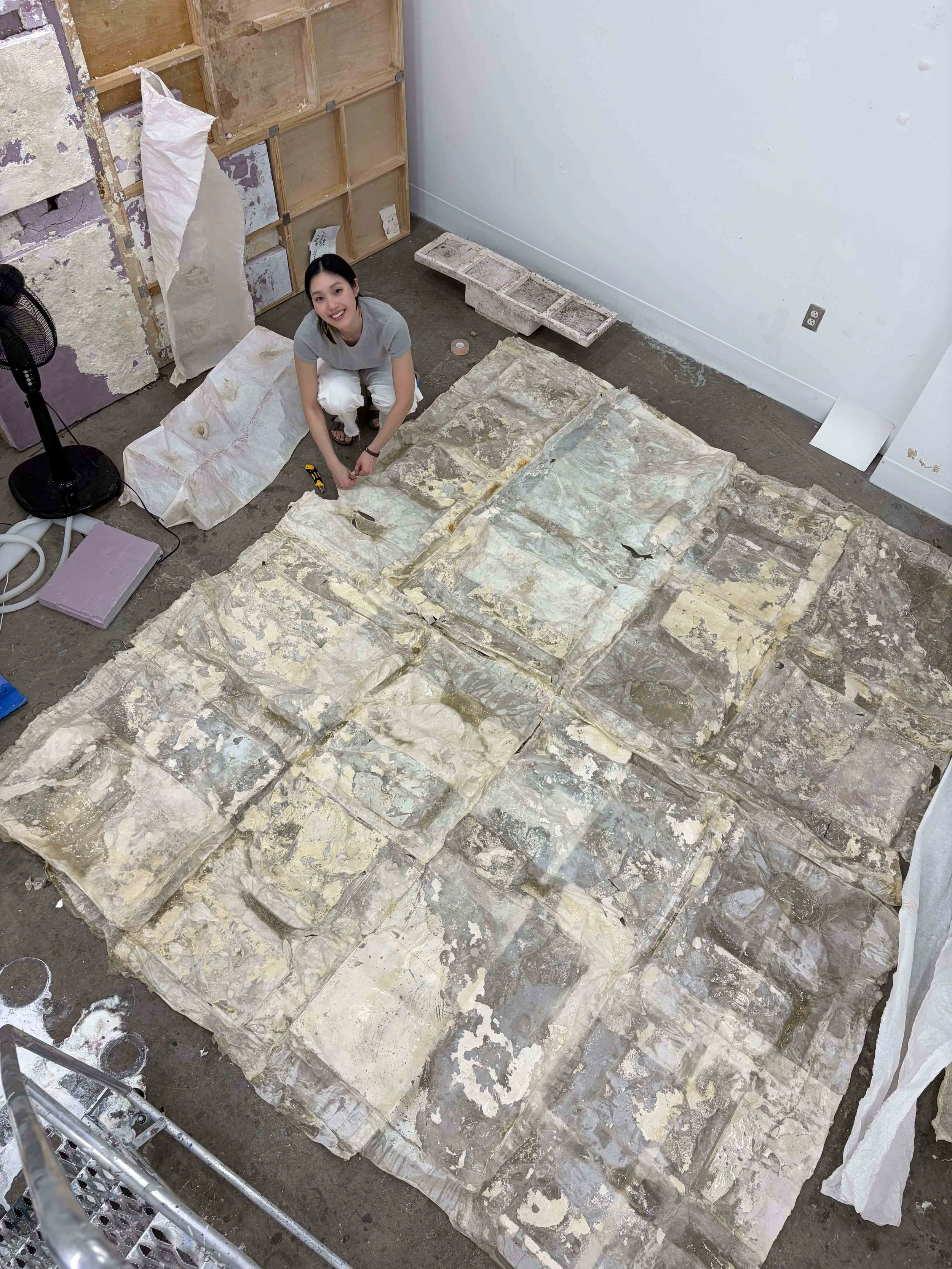
Yuna Cho (b. 1993, Seoul, South Korea; Korean-Canadian) creates sculptural environments that explore how perception is shaped through material, light, and time. Working with handmade paper, gelatin, glycerin, and plaster, she traces quiet transformations as materials respond to gravity, humidity, touch, and duration, allowing her works to soften, erode, collapse, and harden again as living records of time and contact.
Cho received her MFA in Painting and Printmaking from Yale University and BFA in Painting from Rhode Island School of Design. Her work has been exhibited at James Fuentes Gallery, Tina Kim Gallery, Accent Sisters, Galerie Kandlhofer (Vienna, Austria), Gallery Chang, and Minot State University, and Hongik Museum of Art (Seoul, South Korea). Her work has been featured in New American Paintings (Issue 177) and Chosun Ilbo Daily, and is a recipient of the CEAS Summer Travel & Research Grant from Yale University. She is a nominee for the AICAD Post-Graduate Teaching Fellowship (2026–27) and currently teaches Drawing Foundations as an Adjunct Professor at Western Connecticut State University.
Website: https://yunacho.cargo.site/
Instagram: @yunacho_studio
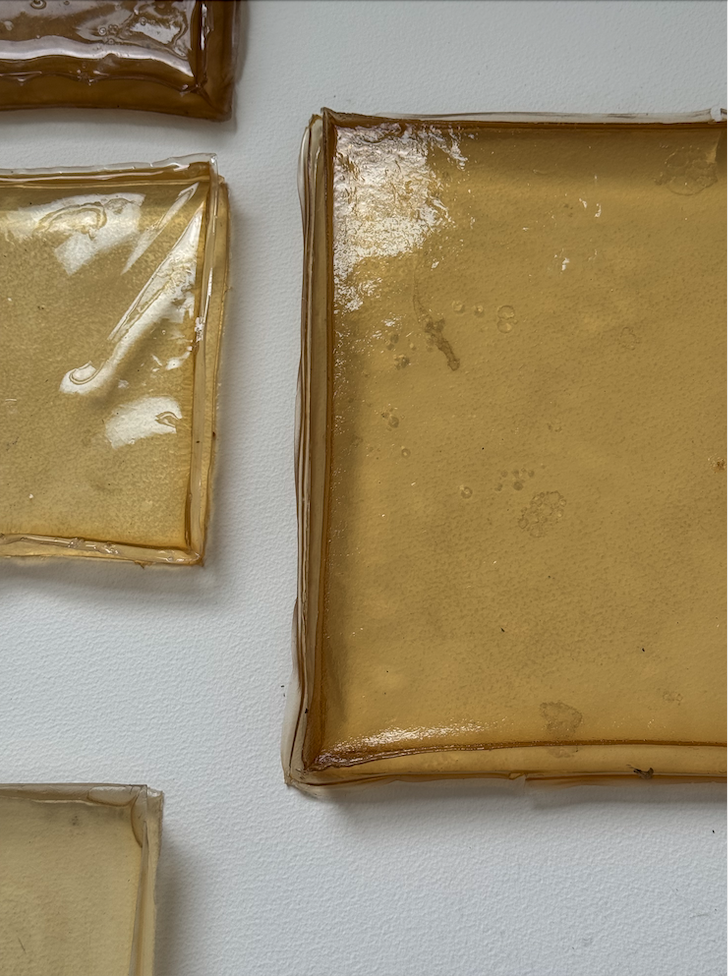
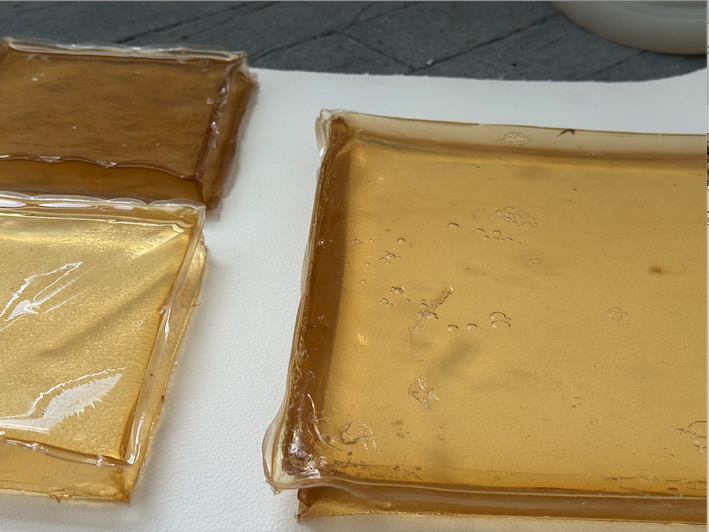
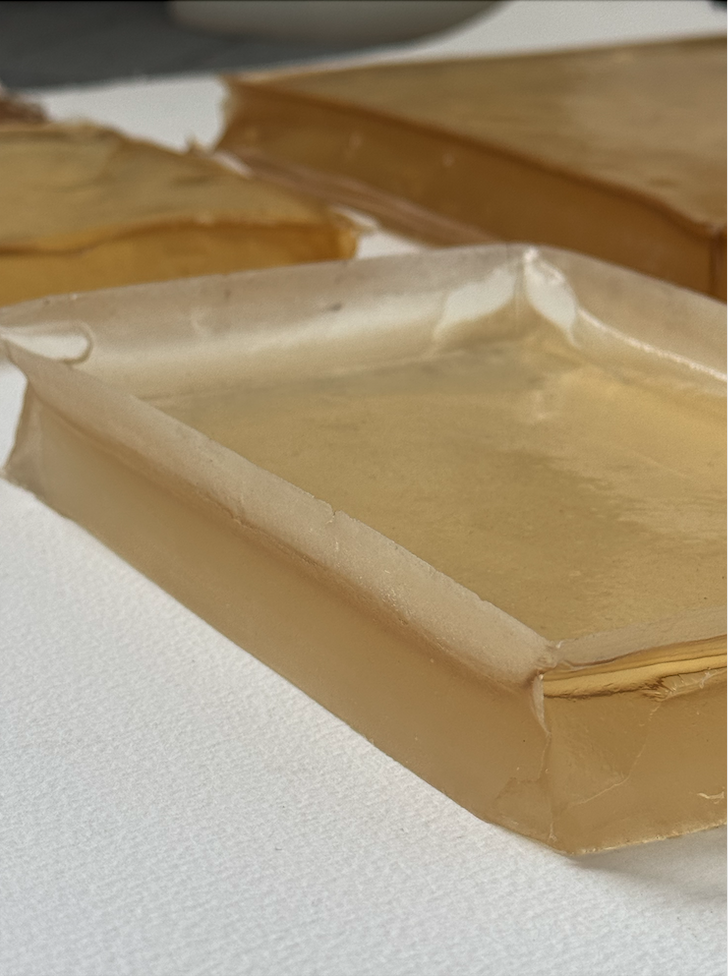
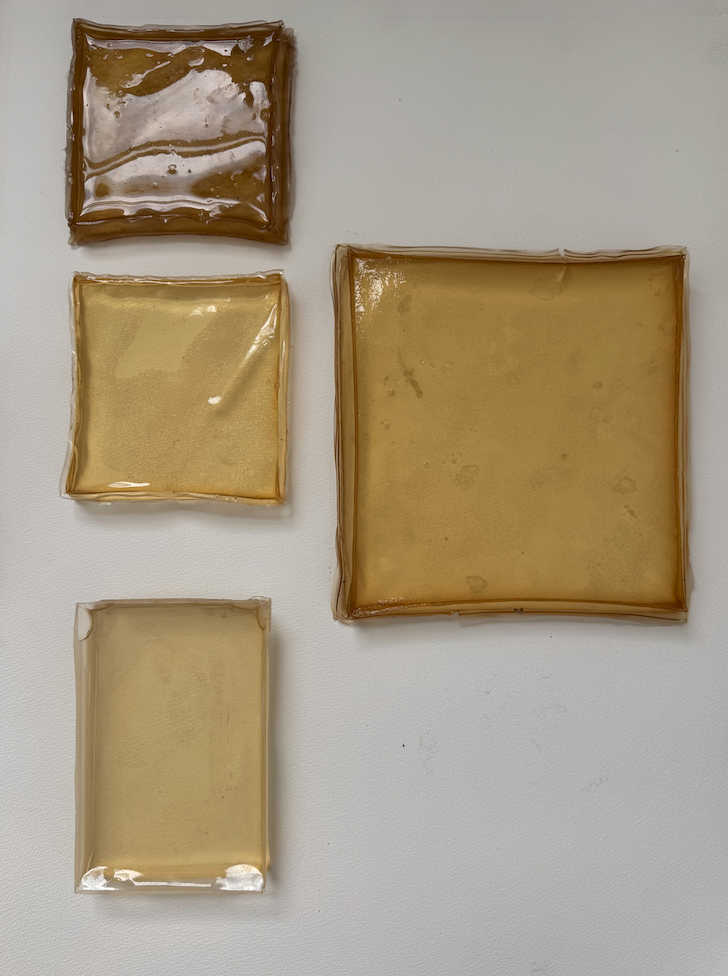
Each page carries the memory of the one before it, with traces received, accumulated, lost, and resurfaced. Bound together as one body, the book continues to swell, soften, and shift, carrying what has shaped it while adapting to what comes next.
Each book will contain three or four gelatin pages. The book begins with a wooden frame containing no image. A conventional frame defines the boundary of an image, telling us where the image begins and ends. Here, it instead contains an embossment of conditions: pressure, gravity, trapped air, humidity, contamination, shrinkage, and other traces of its surroundings.
Each page is cast from the page preceding it, allowing these traces to be received, passed on, lost, re-emerged, and accumulated from one generation to the next. The book becomes genealogical: each page exists through contact with the one before it, yet none is an exact copy. When closed, the pages form a single body. The book itself remains responsive to humidity continuing to swell, contract, soften, and shift over time. It becomes a body continually shaped by an accumulation of encounters, each experience leaving a trace, even as that trace is reshaped by what follows.